
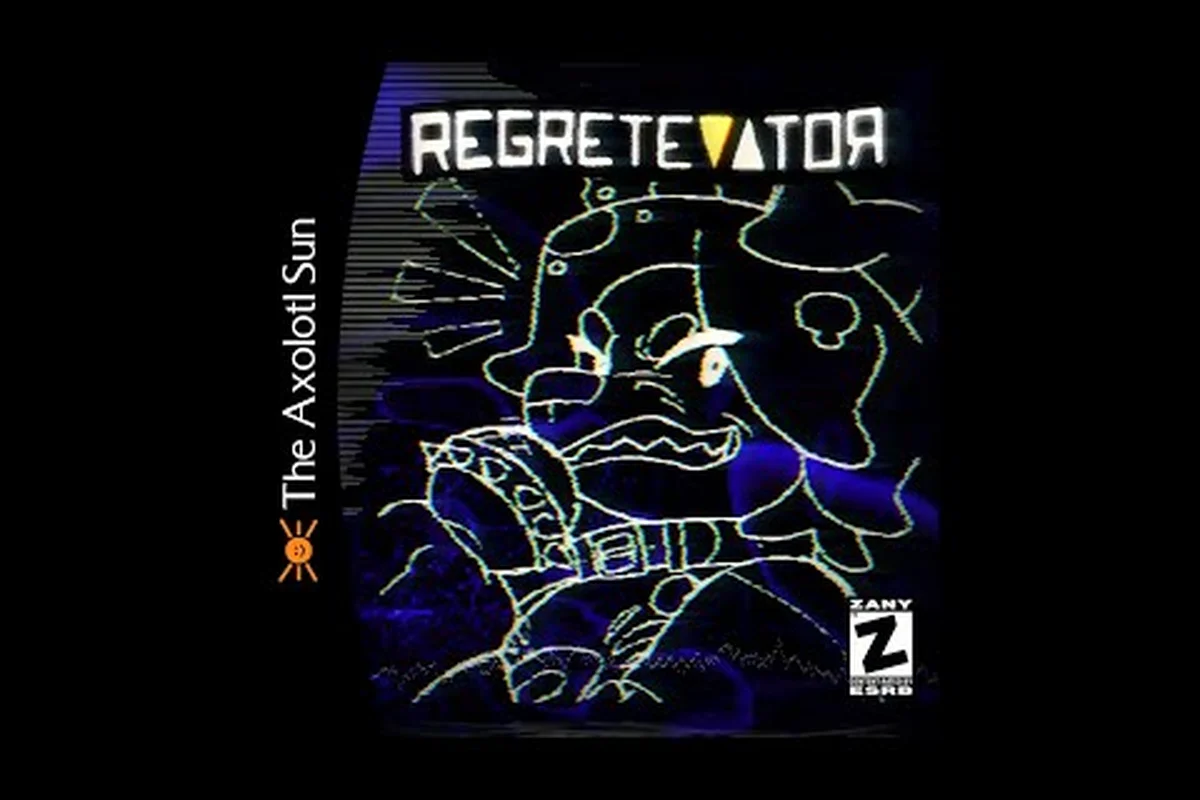
A new layer of Regretevator secret songs has been quietly reshaping how the community reads the elevator's soundtrack. Beyond the obvious jingles that play on social floors, hidden audio cues are surfacing inside the Maze, behind Floppy Shoppy props, and across elevator shaft zones. The tracks connect to Gregoriah, Pest, and the broader Axolotl Sun meta-story, which is why lore-focused players are now treating every ambient hum as a clue worth cataloging.
Why Regretevator Secret Songs Matter for Lore Hunters
The elevator atmosphere in Regretevator is denser than most players realize at first launch. The base soundtrack runs on a layer of muffled radio chatter, vending machine hums, and NPC voice lines that loop quietly while riders wait for the next floor announcement. Layered on top of that baseline are the Regretevator secret songs: tracks that only trigger when a player enters a specific zone, holds a particular item, or steps out of bounds in a precise way. The community treats each of these triggers as a breadcrumb because the song titles, lyrical fragments, and remix credits often mirror dialogue pulled from the Regretevator Roblox page and seasonal event drops.
For lore hunters, the audio is treated as canonical because the developer uses it to foreshadow floor introductions, NPC arcs, and meta-story beats. Players cataloging the soundtrack have noticed that new tracks tend to debut inside limited-time event badges, then quietly persist as ambient layers inside the elevator shaft long after the event ends. The result is a soundscape that functions like a moving timeline: every hidden song is essentially a release note players can hear, even when the changelog stays quiet.
| Audio Source | When It Plays | Lore Weight | Discovery Difficulty |
|---|---|---|---|
| Elevator shaft ambient hum | Always while riding | Low | None — passive |
| Floor-specific radio loops | During floor dwell time | Medium | Easy — stay and listen |
| Hidden trigger songs | On prop interaction or OOB entry | High | Hard — requires movement tech |
| Event-locked remixes | During seasonal event windows | Very high | Very hard — time-gated |
The breakdown above shows why hunters prioritize hidden trigger songs: the higher the lore weight, the more likely a track connects to an active Regretevator lore theory rather than simple ambience. Players who catalog audio carefully often find themselves ahead of the wiki curve because the developer tends to drop songs before the corresponding visual lore lands.
The Maze Radio Track and Its Story Beats
The Maze floor has become the single most important location for Regretevator secret songs because it hosts the longest uninterrupted audio loop in the game. Riders who enter the Maze are funneled through corridors lit by alternating teal and amber strips, while a slow, melancholy track bleeds through the overhead speakers. The track is often described by the community as a downtempo synth loop layered with distant choral pads, and it carries a distinct motif that recurs inside other secret songs later in the run.
Reading the Maze Floor Audio Cues
The Maze radio track is more than decoration: it carries three identifiable story beats that experienced hunters learn to recognize on repeat runs. The intro establishes a sense of distance, the mid-section introduces a melodic fragment that sounds like a slowed-down vocal loop, and the outro fades out with a low drone that some players have linked to the Gregoriah thread. Because the track repeats almost identically across runs, it functions as a control sample — when a new variation appears during a patch, players know the lore has shifted even before the patch notes confirm it.
Players documenting the Regretevator infected floor guide have flagged the Maze as the anchor for any analysis of the regretevator maze song origin, because the floor's tilework and prop placement evolved alongside the soundtrack rather than after it. That sequencing matters for hunters who want to know which version of the loop a given run is actually playing.
What the Regretevator Maze Song Origin Tells Us
Community analysis of the regretevator maze song origin points to a small handful of credited composers and remix artists, with Kubbi appearing in metadata attached to the elevator's loader. Kubbi is a Norwegian electronic producer known for chiptune-leaning tracks, and several community posts link one of the recurring Maze themes to the Spiritdancer remix. The exact credits remain unofficial in most write-ups, but the melodic fingerprint matches the same synth palette that Kubbi uses across his publicly released catalog, which is why the connection persists in Regretevator fan theories.
| Cue | Approx. Loop Length | Distinct Element | Linked Lore Thread |
|---|---|---|---|
| Maze intro hum | 45–60 sec | Distant choral pad | Gregoriah thread |
| Maze mid motif | 90 sec | Vocal sample fragment | Axolotl Sun meta-story |
| Maze outro drone | 30 sec | Sub-bass + low sweep | Pest foreshadowing |
| Floppy Shoppy jingle overlay | 15 sec | Toy piano riff | Shopkeeper arc |
The table above summarizes the four cues most commonly cited in community audio logs. Hunters who want to verify a recording typically run a spectrogram comparison against the public Kubbi discography, then check whether the new variation lines up with the latest patch notes posted to the official developer channels.
Kubbi Spiritdancer and the Remix Layer
The Kubbi Spiritdancer remix is the single most discussed hidden track in the Regretevator audio community, partly because its melody is recognizable within seconds and partly because it shows up in more places than any other secret song. Players first reported the remix bleeding through the Floppy Shoppy stop, then later identified variations inside the elevator shaft and behind one of the out-of-bounds walls near the basement chest puzzle. The track loops at a slightly higher tempo than the Maze version, but it shares enough of the same motif that listeners can identify it even when a new layer has been added on top.
How the Spiritdancer Remix Surfaces Across Floors
What makes the Kubbi Spiritdancer remix a centerpiece of Regretevator secret songs is the way it surfaces across multiple floor types. On social floors the remix only plays as a faint ambient hum, often masked by NPC chatter. On puzzle floors it tends to play in short bursts tied to a specific prop interaction, which means hunters need to know the exact trigger point. On out-of-bounds routes the remix plays uninterrupted, which is why experienced players treat OOB runs as the cleanest way to capture a clean audio sample.
| Floor Type | Spiritdancer Behavior | Capture Difficulty | Best Time to Listen |
|---|---|---|---|
| Social floors | Ambient hum, masked | High | Late in the dwell timer |
| Puzzle floors | Triggered burst | Medium | Right after prop interaction |
| OOB routes | Full uninterrupted loop | Low | After climbing past a Hyperlaser gate |
| Event floors | Stems layered with event theme | Variable | First five minutes of the event window |
The chart above shows why audio hunters often route their runs toward OOB zones first. The cleanest Spiritdancer sample is recorded by reaching an OOB pocket near the elevator shaft, then letting the track loop two or three times before clipping out. The capture is the foundation for any serious Regretevator lore theory because the remix is treated as a temporal marker for events that have not yet been added to the changelog.
Why the Remix Shows Up in Regretevator Fan Theories
Because the Kubbi Spiritdancer remix appears in so many places, it has become a default reference point in Regretevator fan theories. When a new hidden room surfaces, hunters will almost always check whether the remix is playing inside it, because the presence of the track tends to indicate the room has narrative significance. When the remix is missing, the room is usually treated as a pure puzzle or an experimental test box that will be reworked or removed in a later patch.
The remix also functions as a community-built watermark. Players who want to verify a leaked screenshot or audio clip often look for the Spiritdancer motif in the background, because faked clips rarely reproduce the layered stems accurately. That verification role is one of the reasons the track has stayed near the top of community listening lists even as the elevator lineup has expanded.
Trigger Doors, OOB Routes, and How Songs Unlock
The mechanics of how Regretevator secret songs unlock are the most misunderstood part of the soundtrack, because the trigger logic is layered and partly hidden. Most players discover their first hidden song by accident: a door they thought was decorative clicks open, a wall they clip through leads to a corridor, or a Floppy Shoppy prop reacts in an unexpected way. The audio cue that follows is the developer's way of confirming that the player has actually reached a content layer rather than a graphical glitch.
Reading Trigger Doors and Floor Prop Patterns
Trigger doors across the elevator follow a small set of patterns. The most common variant requires the player to stand on a specific tile and interact with a prop in a particular order, which often coincides with the start of a vocal line from an NPC riding the cab. A second variant requires a precise movement input — for example, a Hyperlaser dash followed by a jump — that opens a doorway for a few seconds. A third variant activates only during seasonal events, which means the corresponding secret song is effectively time-gated.
| Trigger Type | Input Required | Song Length | Common Floor |
|---|---|---|---|
| Tile + prop interact | Stand on marker, click prop | 30–90 sec | Hotel |
| Movement-tech dash | Hyperlaser + jump | 60 sec | Elevator Shaft |
| Seasonal event flag | Active event badge | 90–180 sec | Holiday floors |
| NPC dialogue sync | Wait for vocal cue | 45 sec | Floppy Shoppy |
The table above maps the four trigger families to the floors where they most often appear. Hunters who want to build a complete secret-songs catalog usually work through these patterns in the order shown, because the tile-and-prop triggers are the most forgiving for new players while the seasonal event flags require the most preparation.
Out-of-Bounds Routes and Audio Payoffs
OOB routes are the most reliable way to hear Regretevator secret songs in clean form, because the audio layers that normally mask the tracks are stripped away once a player is out of bounds. The classic entry point is the elevator shaft near a Hyperlaser gate, where a precise climb leads to a hidden corridor with a glowing AxoEye prop. Inside that corridor, the Spiritdancer remix plays uninterrupted, and the corridor's wall art changes subtly between patches to reflect the current lore arc.
| OOB Entry | Tools Needed | Audio Reward | Risk Level |
|---|---|---|---|
| Elevator shaft corridor | Hyperlaser | Full Spiritdancer loop | Medium |
| Basement chest wall clip | Wall-clip tech | Maze outro drone | High |
| Floppy Shoppy rooftop | Stack jump | Toy piano overlay | Medium |
| Hotel back staircase | Dash + jump | Vocal sample fragment | Low |
The chart above shows why OOB routes have become the de facto recording ground for serious audio hunters. Each route pairs a specific movement tech with a specific audio reward, which makes run planning much more efficient when a new patch adds a fresh track. Players who already know how to execute a Hyperlaser dash will find the shaft corridor the easiest entry point, while newer players should start with the Hotel staircase because the input is the most forgiving.
Connecting Songs to Gregoriah, Pest, and the Axolotl Sun
The deepest layer of the soundtrack is the way Regretevator secret songs connect to specific characters, including Gregoriah and Pest. The community treats these connections as canonical because the same motifs reappear in NPC voice lines, floor ambience, and seasonal badge art, which means the songs are part of the worldbuilding rather than flavor audio. The two most active threads are the Gregoriah lore thread and the Pest lore thread, both of which have a dedicated community following on the official Axolotl Sun Roblox group and the developer-run Discord.
Regretevator Gregoriah Lore and Audio Motifs
The Gregoriah thread is one of the longest-running community investigations in the elevator, and audio plays a central role. Gregoriah's dialogue includes melodic fragments that line up with the Maze radio track and the Spiritdancer remix, which has led players to argue that Gregoriah is either narrating or generating parts of the soundtrack. The regretevator gregoriah lore thread treats each new audio drop as a potential confirmation of a meta-story beat, and the community often waits for a song variation before accepting a visual clue as canonical.
Players who want a more complete picture of how Gregoriah fits into the broader Axolotl Sun meta-story can cross-reference the Axolotl lore deep dive, which tracks how the Gregoriah thread connects to other characters and to the larger endgame reveal. The audio angle is especially useful because the Gregoriah motifs are audible even on social floors where the visual storytelling is minimal.
Regretevator Pest Lore and Seasonal Audio Drops
The Pest thread operates differently. Pest is tied to the Subway and Pest's Den floors, both of which use distorted, lower-tempo audio that contrasts with the cleaner Maze loop. Community analysis of regretevator pest lore has linked the Subway ambience to a slowed, pitch-shifted version of the Spiritdancer remix, which is one of the reasons the Pest arc is treated as a dark mirror of the Gregoriah thread. When a new seasonal event adds a Pest-themed badge, the soundtrack almost always gains a new layer that references the Subway ambience, and that layering is what makes Pest one of the most reliable audio-driven lore arcs to track.
| Character | Motif Style | Linked Floor | Common Trigger |
|---|---|---|---|
| Gregoriah | Choral pads, slow synth | Maze | Floor dwell time |
| Pest | Distorted, slowed loops | Subway | Event flag |
| Lampert | Toy piano jingle | Floppy Shoppy | Prop interact |
| Poob | Light chiptune | Social floors | NPC dialogue sync |
The table above shows the four-character audio palette most players use to identify lore arcs. When a new track surfaces, the first thing hunters check is which motif it most closely resembles, because the palette is stable enough that even partial fragments can be attributed to a specific character. The system is not perfect — overlap between Gregoriah and Pest stems is one of the open questions in current Regretevator lore theories — but it gives hunters a working framework for tagging new audio drops.
How to Catalog Regretevator Secret Songs on Your Own Runs
Players who want to build a personal audio log can follow a small, repeatable workflow. The workflow below is what experienced hunters use to keep their catalogs consistent across patches, and it lines up with the way the community documents new tracks on the r/regretevator subreddit and on the developer Discord.
Step-by-Step Recording Workflow
-
Pick one floor per session and clear it twice. The first pass is for muscle memory, the second is for clean audio capture.
-
Bring the Hyperlaser if the floor allows OOB access, because the cleanest recordings come from out-of-bounds corridors.
-
Wait for NPC dialogue to start before you trigger a hidden song, because some of the layered stems only play when an NPC is mid-line.
-
Record in 90-second clips rather than full loops, because 90 seconds is enough to identify a motif without bloating your catalog.
-
Tag every clip with the floor, the trigger type, and the closest matching motif from the character palette table.
-
Cross-check against the latest patch notes posted to the developer X account so you know whether a track is brand new or a re-tuned version of an older one.
| Step | Tool or Input | Output | Time Cost |
|---|---|---|---|
| Pick a floor | Run planner | Floor list | 2 min |
| Clear the floor | Standard run | Muscle memory | 6–10 min |
| Bring Hyperlaser | Loadout | OOB access | 1 min |
| Wait for NPC line | Patience | Clean layer | 1–3 min |
| Record 90s clip | External recorder | Tagged audio | 2 min |
| Tag the clip | Notepad or sheet | Catalog entry | 3 min |
| Cross-check notes | Patch log | Lore match | 4 min |
The total cost for a single tagged clip is roughly twenty minutes, which is why serious hunters tend to focus on one floor per session rather than trying to record everything in a single run. The workflow scales well, because once a player has ten tagged clips they can start comparing motifs directly instead of relying on memory.
Building a Cross-Event Audio Map
Once a player has a small personal catalog, the next step is to map clips across events and patches. Community trackers use a simple matrix: rows are floor zones, columns are event windows, and cells hold the audio fingerprint that played during that intersection. The matrix is useful because it makes it obvious when a track has been re-used, re-mixed, or quietly removed, all of which are signals that the meta-story is shifting. Players who share their matrices with the community are usually the first to spot a new variant of the Spiritdancer remix, because the pattern shows up as a delta in a cell they have already documented.
Practical Tips for Faster Secret Song Discovery
Players who want to speed up their discovery rate can lean on a handful of consistent habits. The tips below are drawn from community tracking logs rather than official documentation, so treat each one as a starting point rather than a guarantee.
-
Run elevator shaft corridors on every patch day, because the Hyperlaser route is the cleanest entry to the Spiritdancer loop.
-
Listen for vocal sample fragments during the Maze mid-motif, because those fragments tend to be the first sign of a new lore beat.
-
Keep a small spectrogram tool open while recording, because visual fingerprints make motif matching much faster than ear training.
-
Stack Toy Piano jingles with the Lampert motif table to differentiate Floppy Shoppy layers from generic ambient tracks.
-
Avoid claiming a song is new until you have cross-checked at least two patch logs, because re-tuned versions of older tracks are common.
The habits above are unglamorous but they compound. A player who runs the elevator shaft corridor on every patch day will end the year with a near-complete record of how the Spiritdancer remix evolved, and that record is the foundation for any serious contribution to the current Regretevator lore theories thread.
Where the Soundtrack Is Likely Headed Next
The trajectory of the soundtrack points toward more layered stems rather than brand-new standalone tracks, because the developer has been stacking new audio on top of the existing Spiritdancer and Maze loops for the last several patches. The pattern suggests that the next major audio drop will probably be a seasonal remix that adds a Pest-themed stem to the Maze mid-motif, which would be consistent with how previous events introduced lore through audio before revealing the visual side. Players who want to stay ahead should focus their recording energy on the seasonal event windows, because the cleanest first-sample of any new track almost always comes from an event flag.
The soundtrack will also continue to function as a community checkpoint. Because the developer uses audio to foreshadow visual drops, players who catalog carefully will keep catching lore beats before they appear in the patch notes, and that lead time is the main reason the audio community has grown as fast as it has. The pattern is stable enough that even newcomers can build a meaningful catalog within a few weeks of focused runs, especially if they start with the elevator shaft corridor and work outward.
Frequently Asked Questions
How does the regretevator maze song origin connect to the Axolotl Sun meta-story?
Community analysis links the Maze track's melodic fragments to the same synth palette used in the developer's other releases, and the outro drone is widely cited as a foreshadowing of the Pest arc. The track is treated as a control sample, so any new variation is read as a sign that the broader meta-story has shifted before the visual side is updated.
How do Regretevator fan theories use audio as evidence?
Hunters treat melodic fingerprints as canonical because the same motifs reappear in NPC dialogue, floor ambience, and seasonal badge art. When a new track surfaces, the community tags it with the closest matching motif from the character palette, which is what makes the Gregoriah and Pest threads trackable through audio long before the visual side confirms them.
What is the link between regretevator gregoriah lore and the soundtrack?
Gregoriah's dialogue includes melodic fragments that line up with the Maze radio track and the Spiritdancer remix, which has led players to treat Gregoriah as a narrator or generator of parts of the soundtrack. The connection is one of the most stable signals in the lore, and it is why Gregoriah tracks are usually the first thing hunters re-check after a new patch.
How is regretevator pest lore different from the Gregoriah thread?
The Pest thread uses distorted, slower versions of the same motifs, which makes it read as a dark mirror of the Gregoriah arc. Pest-themed badges tend to introduce new audio layers that reference the Subway ambience, so the Pest thread is most active during seasonal event windows when those layers are first added.
Do Regretevator lore theories change with every patch?
Yes, but the changes are usually additive rather than rewrite-level. Most patches add a new audio layer or remix an existing motif, which the community logs as a delta in their cross-event matrix. Full rewrites of established lore threads are rare, so even a small delta in the soundtrack is treated as a meaningful signal.